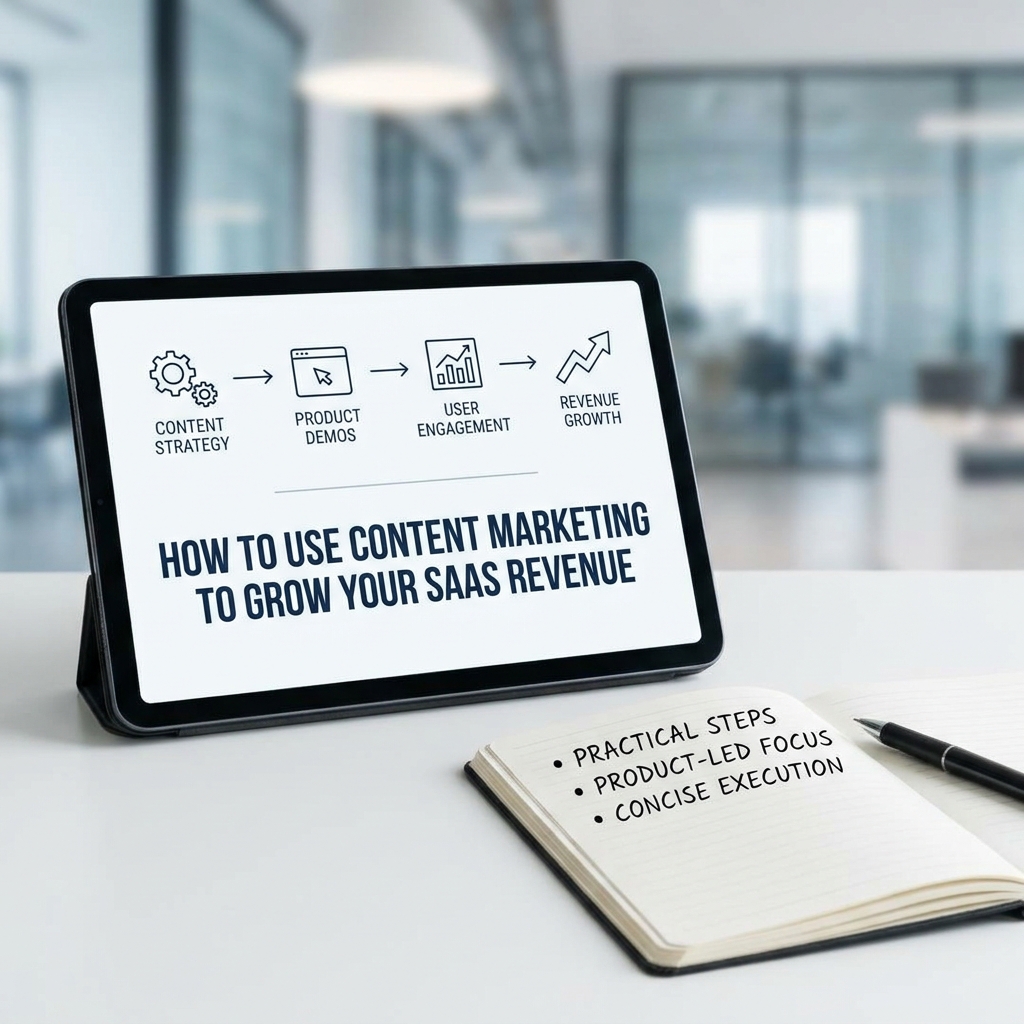
Most SaaS founders underestimate content marketing because the returns feel slow compared to paid ads. The catch is that paid traffic stops the moment you stop paying, while a single well-built article can compound leads and revenue for years. The SaaS companies hitting consistent growth are the ones treating content like a product — measured, iterated, and tied directly to their funnel.
Start by mapping every piece of content to a stage in your buyer's journey. A blog post targeting "best project management tools" serves awareness. A comparison page like "Tool X vs Tool Y" targets consideration. A case study showing how a customer reduced churn by 20% with your product moves people toward purchase. When each piece has a job, you stop producing content that reads well but converts nowhere.
Double down on search intent, not search volume. A keyword with 50 monthly searches and clear buyer intent outperforms a term with 50,000 searches that only attracts curious browsers. Look for long-tail queries where someone is actively evaluating solutions — phrases with "for," "vs," "pricing," or "alternatives" are strong signals. Build content that answers the question and positions your product as the answer.
Repurpose ruthlessly. One customer interview can become a written case study, a short LinkedIn thread, an email sequence, and a podcast clip. The upfront research cost stays the same; you just multiply distribution. SaaS teams that repurpose see 3-4x more pipeline per content hour than teams publishing one-off posts.
Tie content to a measurable checkpoint. Pick one leading indicator — organic signup clicks, demo requests from organic traffic, email opt-ins — and review it every Monday. If a content cluster isn't moving that metric after 60 days, revise the angle or retire it. This turns content from a faith-based exercise into a performance channel your investors will respect.
Start this week: audit your last ten published posts, tag each one to a funnel stage, and identify the three gaps. Fill the highest-impact gap with one piece built around a buyer-intent keyword, then track organic signups for 30 days. That single loop — map, create, measure, refine — is the operating rhythm behind every SaaS content engine that actually drives revenue.